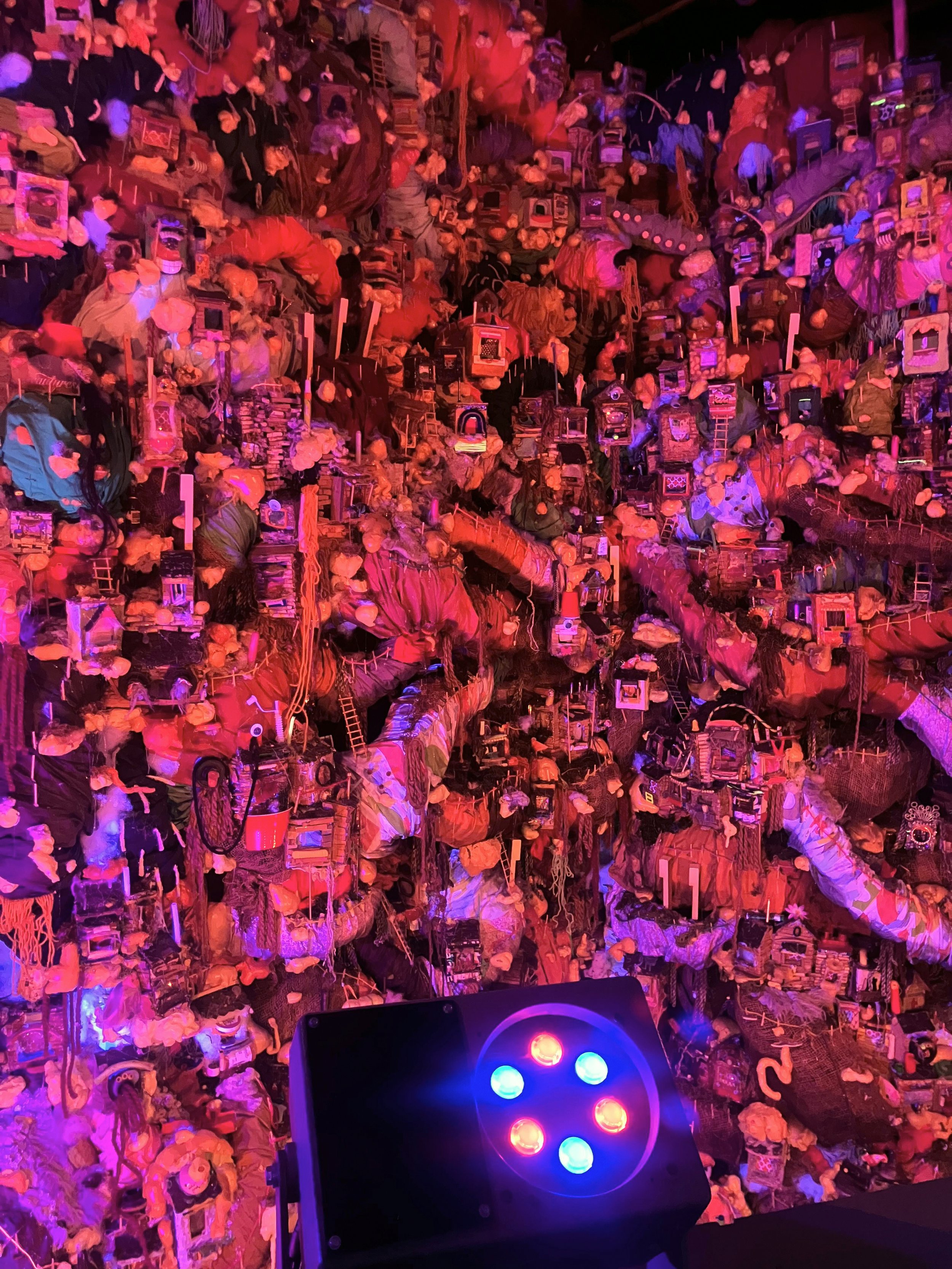
Alysha Farling-Futterman - Contributing Artist
Alysha Farling-Futterman is a visual artist living and working in Victoria BC, on the unceded territories of the Lekwungen speaking peoples. Farling received her BFA from Concordia University in 2013. She has exhibited across Canada and had four residencies, particularly at Residencia Corazon (Argentina), and recently at Rockslide (Victoria). Previously she has received funding from Canada Council for the Arts.
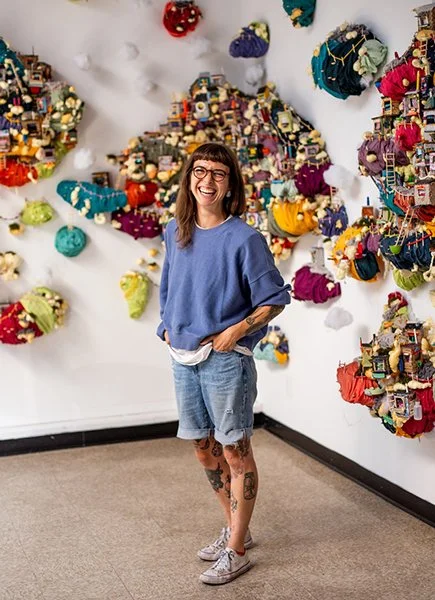
How do you manage a work-life balance as an artist?
I’m an artist and a parent. I work full-time, and my husband works full-time on the opposite schedule - so finding balance is an ever-changing art form in itself. If I don’t schedule time for my practice, it simply doesn’t happen. I have to be actively planning. Some weeks I make it into my studio a few times; other weeks I’m lucky if I manage an hour. When I do get there, I try to make the most of it - usually by planning ahead what I’ll be working on.
I function well with lists - lots of lists - in all aspects of life management. My sketchbooks fill up with them; they help keep my head on straight.
Before my daughter, there was no need to manage my time. My studio was at home, in our second bedroom, and I’d go in and out of it at all hours. I don’t think I truly understood time before becoming a parent.
After she was born, I needed a separate studio space because of the nature of my work - collecting objects, debris, and trash, as well as needing space to build. I now have a studio at Rockslide, which is a dream, but it takes effort, time, and planning to get there.
Right now, managing work-life balance is mostly about accepting the ebb and flow. When I have less time in the studio, it means I’m where I need to be - with my kiddo and family. I have to remind myself that this imbalance is okay - that it will shift - and that it doesn’t mean I’m less of an artist or unmotivated. It’s the opposite: I’m internally preparing, marinating, for when time opens up again to get into my studio and create. I’m looking forward to the next stretch when I can really dig my teeth into another big project.
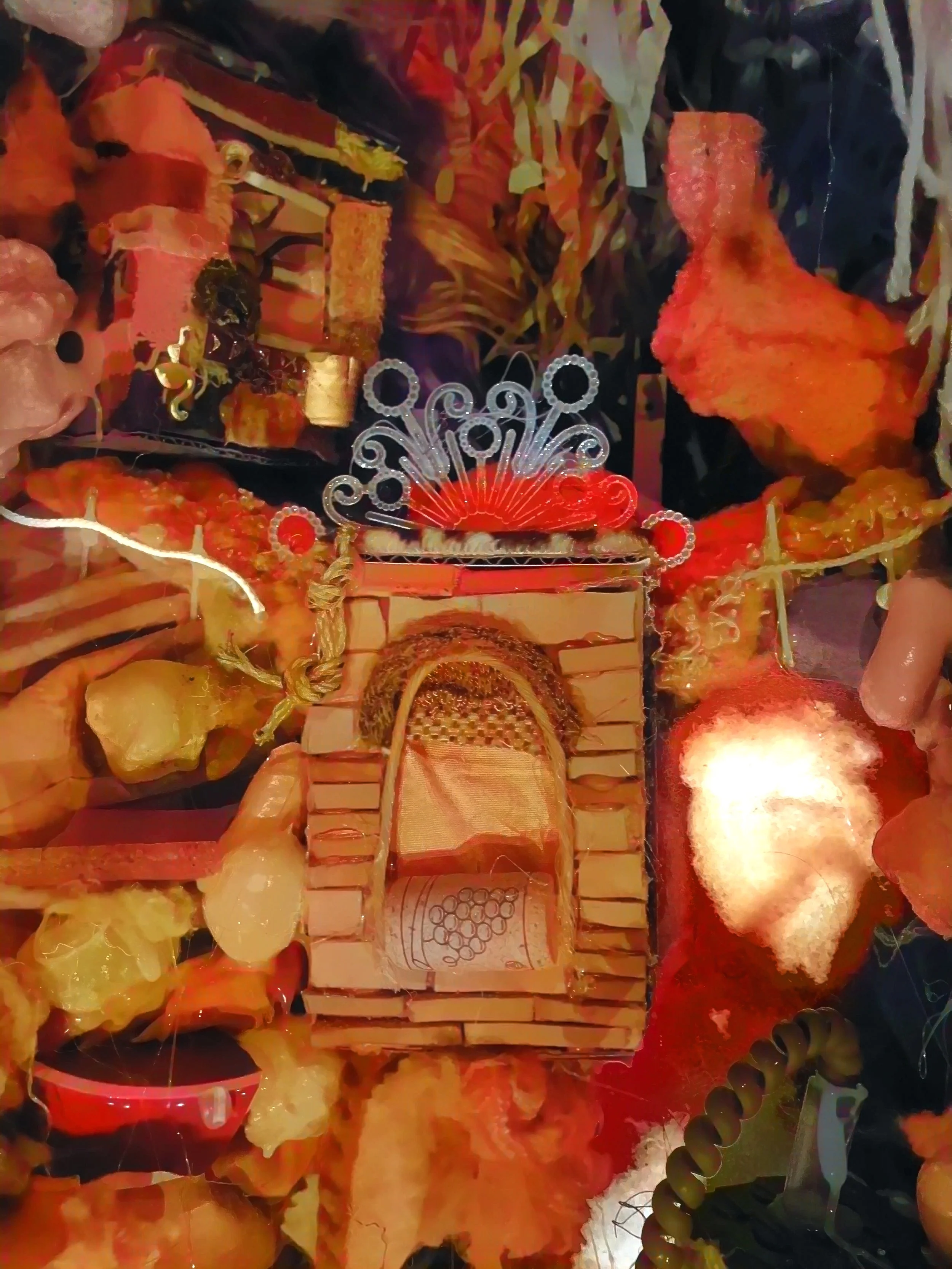
How have people responded to your work (outside the Artcade)?
I’ve had the gamut of responses to my work - positive, negative, and everything in between - and I appreciate hearing it all. A common response is that my work feels nostalgic, bringing back memories from childhood or transporting someone somewhere else. If I’m lucky, they’ll share that memory with me. I love hearing those stories and imagine them woven into my sculptures, intertwined.
Another response I often get is excitement over discovering different bits and objects. Listening to people truly explore my work - hunting through it - brings me pure joy. The squeals, laughs, questions, and little “ohs” and “awws” make me so happy.
Sometimes people describe the work as childlike, which I think is often meant as a critique - but to me, that’s an essential part of it. The work isn’t refined to the point of illusion; it’s imperfect, intentionally so. When I’m making, I tap into my child-self - a sense of play. I work intuitively, letting colour, shape, and mood guide me.
I leave holes, place bits in unexpected spots, and sometimes make choices that don’t quite make sense - all to invite curiosity and the viewer’s imagination. Keeping it “unrefined” is my way of asking the viewer to meet me halfway. Without that engagement, it could just be a pile of stuff glued together. It’s a choose-your-own-adventure of sorts.
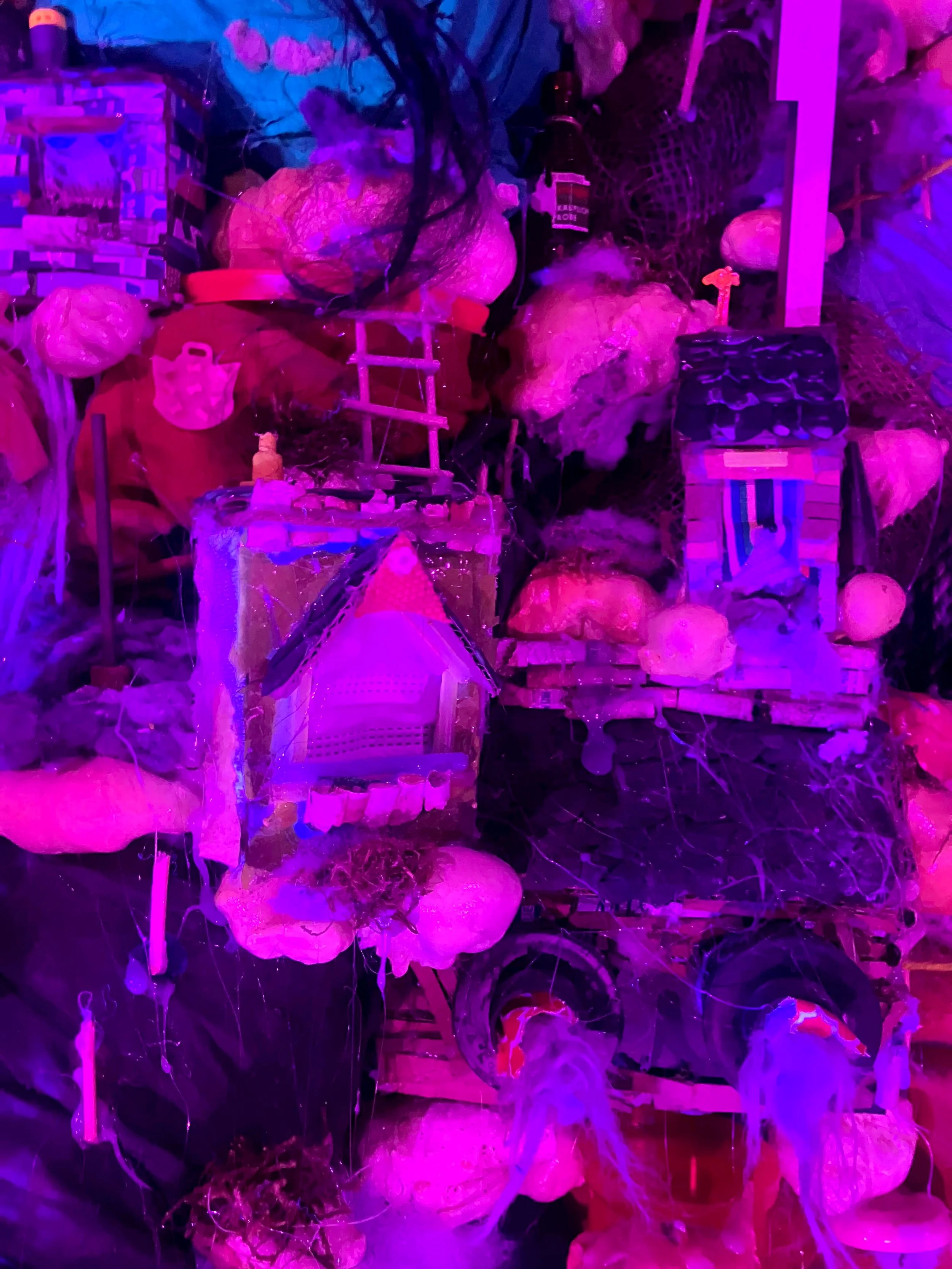
How would you describe your work? Do you consider it collage?
I’d describe my work as sculpture - sculpture connected to drawing, since my pieces originally grew out of my drawings. In university, I made drawings that began with abstract watercolour forms. From there, I would draw over them - houses, bridges, fences, buildings - using pens and pencils. That connection to drawing remains: the wire and fabric in my sculptures act as the watercolour base, while the houses, objects, and personal debris build the drawn world on top.
When I’m working, I feel as though I’m drawing - layering and using colour much as I would on paper. I often work on multiple sculptures and sketchbook drawings at once, allowing them to influence each other.
I’ve never considered my work collage, because I don’t collage in my 2D practice, but I completely understand the connection.
You use everyday objects and detritus in your work, often describing them as “trash.” Tell us about that.
I like using the word trash when working with found objects, bits, and personal items because it helps me stay loose. It keeps the materials open - free to play with, free to manipulate. Calling it trash removes preciousness. Once things start to feel too precious, I can stiffen up and overthink. I’ll hold back from using something because it feels too “good.”
Thinking of the material as trash - discarded and without purpose - makes using it feel like solving a puzzle. I need to find the other pieces it fits with. Once I’ve found a home for it in a sculpture, it transforms again. It becomes part of a larger story, an entry point for the viewer to step into. It has a purpose again.
What I find fascinating about using found materials is the history each piece carries - and how those combined histories can create stories, humour, and sometimes even discomfort between the objects.
Why did you want your work to be included at the Artcade?
There are so many reasons!
First, the Artcade aligns perfectly with my creative values - reused materials, interactivity, imagination, and hand-built. I connect deeply with all of that.
Second, it taps into nostalgia. The space feels like childhood - a reminder of a time before we were glued to our phones. A simpler time. My work is heavily inspired by my own childhood - playing in and around the first house I grew up in, lost in my own imagined worlds. I love spaces that bring me back to that feeling. The Artcade is immersive and grounding all at once.
Third, it’s wacky, weird, and fun - some of my favourite things.
And finally, even before the Artcade took shape on Fort Street, I wanted to collaborate with the people behind it. Their playful, imaginative, inventive, and experimental approach to making instantly resonated with me. Once I met Scott and experienced his energy, I was in. I wanted to be part of what Monkey C Interactive was creating.
Spaces like the Artcade feel vital in a time so dominated by the digital world.
What motivates your creativity?
I’ve always been able to find motivation to create. Since I was little, I’ve used making - drawing, building, assembling - as a way to process and make sense of things. When I’m creatively stuck, I give myself “homework” - small tasks to get moving again. Usually this homework involves repetitive drawings or assembling multiples of things - the repetition loosening the block.
Being around other artists and sharing a studio keeps me accountable and inspired.
Lately, I’ve found listening to comedians talk about their process and how they deal with public failure incredibly inspiring - there’s something comforting about their willingness to bomb and get back up again. That vulnerability and persistence really motivates me.
What are your favourite and least favourite parts of professional art?
My favourite part of professional art is the connection - meeting people, collaborating, sharing ideas.
My least favourite part is the business side: the marketing, the admin, the self-promotion.
How has your style changed over time?
Thematically, my work has stayed consistent, but stylistically it’s evolved. When I first started building 3D miniature worlds, they were simpler - earthy colours and more natural forms.
In the beginning, there were no objects - just wire, fabric, and cardboard buildings. Over time, I began incorporating objects from my own collections and places I’d been. In 2014, I did a residency in Argentina, where I explored the city and collected debris along the way, later weaving it into an installation. That process of collecting while walking has stuck with me ever since.
As I’ve changed, my work has changed too. Because I work intuitively, my sculptures reflect where I’m at in any given moment. Lately, I’ve been pushing how much material, how many objects and bits my work can hold before it tips into chaos - a reflection of this current chapter of busy parent life. I’m also leaning further into abstraction, using colour, pattern, and form to encourage the viewer to tap into their own imagination.
What’s the purpose of your work, and what are some of your artistic goals?
For me, the purpose lies in the act of creation itself. From collecting objects to assembling the small houses, every step gives me a sense of purpose. Giving a second, third, or even fourth life to discarded materials adds a richness that wouldn’t exist otherwise.
When I’m fully immersed in building or drawing, I feel free and playful - and all the noise disappears. Making allows me to problem-solve, experiment, and move my body without self-consciousness.
For the viewer, I hope my work sparks curiosity, ignites imagination, or conjures an old memory. I hope it makes them laugh and I hope it encourages people to look at their surroundings differently - to reconsider the materials and objects in their own lives and to re-imagine their potential and purpose.
As for goals, right now it’s about simply getting studio time when I can. Looking ahead, I’d love to create a book, wearable sculptural worlds, more collaborations, large characters that live among the small ones, and experiments with light, movement, and sound.
My long-term dream is to take over an entire space - or building - with sculptures and to make art full-time.
You can discover more about Alysha and her work at alyshafarling.com.